


24-Year-Old’s $45 Billion Hedge Fund Blows Up Days After Cramer Warned of the Dangers of Margin Trading
24-Year-Old’s $45 Billion Hedge Fund Blows Up Days After Cramer Warned of the Dangers of Margin Trading
AJ Tiarsmith Sun, August 23, 2026 at 2:15 PM UTC
0
ojbyrne / FlickrQuick Read -
MRVL dropped 40% and ADBE surged 27% simultaneously, turning the fund's 4x-leveraged long-short strategy into a total wipeout in under six weeks.
Cramer warned investors to exit margin-financed data center trades two days before Goldman, JPMorgan, and Bank of America forced Aschenbrenner's liquidation.
Don't wait: the analyst who called NVIDIA in 2010 just revealed his top 10 AI stocks. See the full list FREE now.
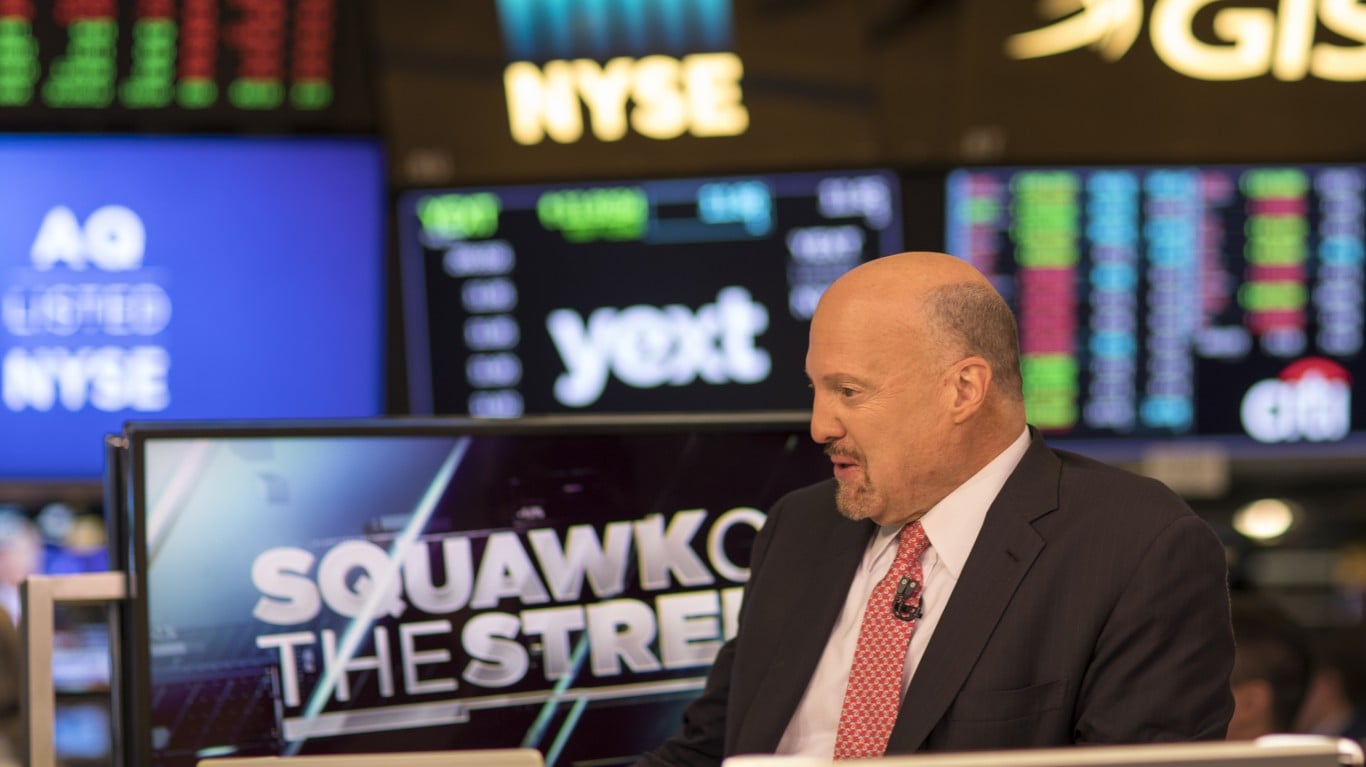
On the morning of July 28, 2026, Jim Cramer told CNBC viewers to exit any data center trade bought on borrowed money: "If you're borrowing money to buy something related to the data center, then tomorrow morning, 9:30 a.m., sell it no matter what." The day before, he had posted on X that an intraday reversal in chip stocks would be "very difficult to reverse" because the sellers were "monstrous, motivated and often margined." Two days later, on July 30, the most talked-about AI hedge fund on Wall Street ceased to exist as a public equities vehicle.
Situational Awareness LP, run by former OpenAI researcher Leopold Aschenbrenner, was forced to sell its entire public equity book to Ken Griffin's Citadel after margin calls arrived simultaneously from its three prime brokers: Goldman Sachs (NYSE:GS), JPMorgan Chase (NYSE:JPM), and Bank of America (NYSE:BAC). The public equity book, worth more than $10 billion at the time of sale, went to Citadel at a discount. What had been a $45 billion fund in early July was suddenly worth roughly $10 billion, with most of that remaining value locked in private, illiquid stakes.
The Wunderkind Trade
Aschenbrenner enrolled at Columbia at 15 and graduated valedictorian in 2021 with degrees in economics and mathematics-statistics. He conducted long-term risk research at Oxford's Global Priorities Institute, then joined OpenAI's Superalignment team and was fired in April 2024 over an alleged information leak he disputes. His June 2024 essay Situational Awareness: The Decade Ahead, a 165-page argument that AGI by roughly 2027 is "strikingly plausible," made him a minor celebrity before he ever managed outside money.
Don't wait: the analyst who called NVIDIA in 2010 just revealed his top 10 AI stocks. See the full list FREE now.
The fund launched in 2024 with roughly $225 million from backers including Stripe's Patrick and John Collison, former GitHub chief Nat Friedman, and investor Daniel Gross. By early July 2026, assets peaked near $45 billion on returns of more than 1,000% since inception and 439% in the first half of 2026 alone. The strategy was straightforward in concept: long AI infrastructure names such as SK Hynix, CoreWeave, and Nebius, short software incumbents including Adobe, all financed at roughly 4x leverage. Public filings as of March 31 also showed large stakes in Bloom Energy, Sandisk, and IREN.
The Trade That Broke
Both legs unwound simultaneously, and the timing could hardly have been worse. From June 22 through July 30, Marvell Technology (NASDAQ:MRVL) fell 40.44%, part of a broader collapse across the AI-networking complex. The Philadelphia Semiconductor Index dropped 28.6% from its June 22 peak over the same stretch. NVIDIA (NASDAQ:NVDA), whose shares slid 6.52% over the same window to $195.04, dragged the whole basket lower. SK Hynix, the fund's largest single long, moved with them.
The short side hurt more. Adobe (NASDAQ:ADBE) rallied 27.19% from June 22 to July 30, closing at $247.90, after posting record Q2 revenue of $6.62 billion (up 13% year over year) and AI-first annual recurring revenue that tripled past $500 million. Adobe also raised its full-year outlook on the strength of that quarter. Marvell illustrates how narrow the pain was: even after its recent collapse, the stock remained up 116.01% year to date through July 30. The VIX jumped 13.5% on July 29 to 20.66, an unusually sharp one-day move consistent with forced liquidation across multiple funds.
Advertisement
At 4x leverage, longs down roughly 40% and shorts up roughly 27% produces total ruin. Several of the fund's top AI long positions fell 35% to 47% in a single month. Six days before the final collapse, on July 24, Aschenbrenner had sent investors a letter describing July's selloff as "some of the most attractive opportunities since early 2025" and invited them to commit fresh capital by August 1. That capital never arrived. Prime brokers made their calls; Citadel took the book.
Aschenbrenner later told investors the dynamic felt like a bank run. Each signal of vulnerability made the next margin call more likely, and other funds, sensing distress, reportedly pressed his positions further.
What Remains, and What to Watch
Situational Awareness retains its private positions: a roughly $5 billion stake in Anthropic, plus smaller holdings in chipmaker MatX and AI data center startup Fluidstack. Those private stakes could not be margin-called, because they cannot be publicly traded. The fund will continue as a private-only vehicle. Anthropic, last valued at roughly $965 billion after its Series H round in May 2026, is expected to go public as soon as October 2026, which could eventually provide Situational Awareness a meaningful exit from its largest surviving position.
On July 30, Cramer said the blowup "reveals the hidden risks of leverage." The lesson is narrower than headlines suggest. NVIDIA guided Q2 revenue to $91 billion, Marvell's data center segment continued to grow, and Adobe raised its full-year outlook. What broke was not the underlying AI thesis. What broke was a fund running $45 billion at 4x leverage with a paired long-short book whose two legs moved sharply against each other in the same month, a combination the position-sizing had implicitly assumed would not happen. It did. The episode joins a short list of leverage-driven blowups, including Long-Term Capital Management, Archegos, and Amaranth, where the original investment view was defensible but the sizing was not.
The next signal to watch is whether other multi-strategy funds running similar AI-infrastructure-long, software-short pairs are quietly cutting gross exposure into August, or whether Citadel's willingness to warehouse the book at scale means the shock stays contained.
Editor's note: This update adds the July 24 investor letter Aschenbrenner sent seeking fresh capital days before the collapse, identifies CoreWeave and Nebius as named long positions from public filings, incorporates the Philadelphia Semiconductor Index's 28.6% decline as broader market context, includes Anthropic's ~$965 billion Series H valuation and expected October 2026 IPO timeline, and adds MatX and Fluidstack as surviving private positions. Adobe's Q2 revenue growth is specified as 13% year over year, confirmed from the company's official earnings release.
Don't wait: the analyst who called NVIDIA in 2010 just revealed his top 10 AI stocks. See the full list FREE now.
Contact editorial@247wallst.com for any questions or corrections.
Source: “AOL Money”
