


Liverpool face end to 134 years of having a ‘Scouser in our team’
Liverpool face end to 134 years of having a ‘Scouser in our team’

Dominic KingSun, August 23, 2026 at 6:01 AM UTC
0
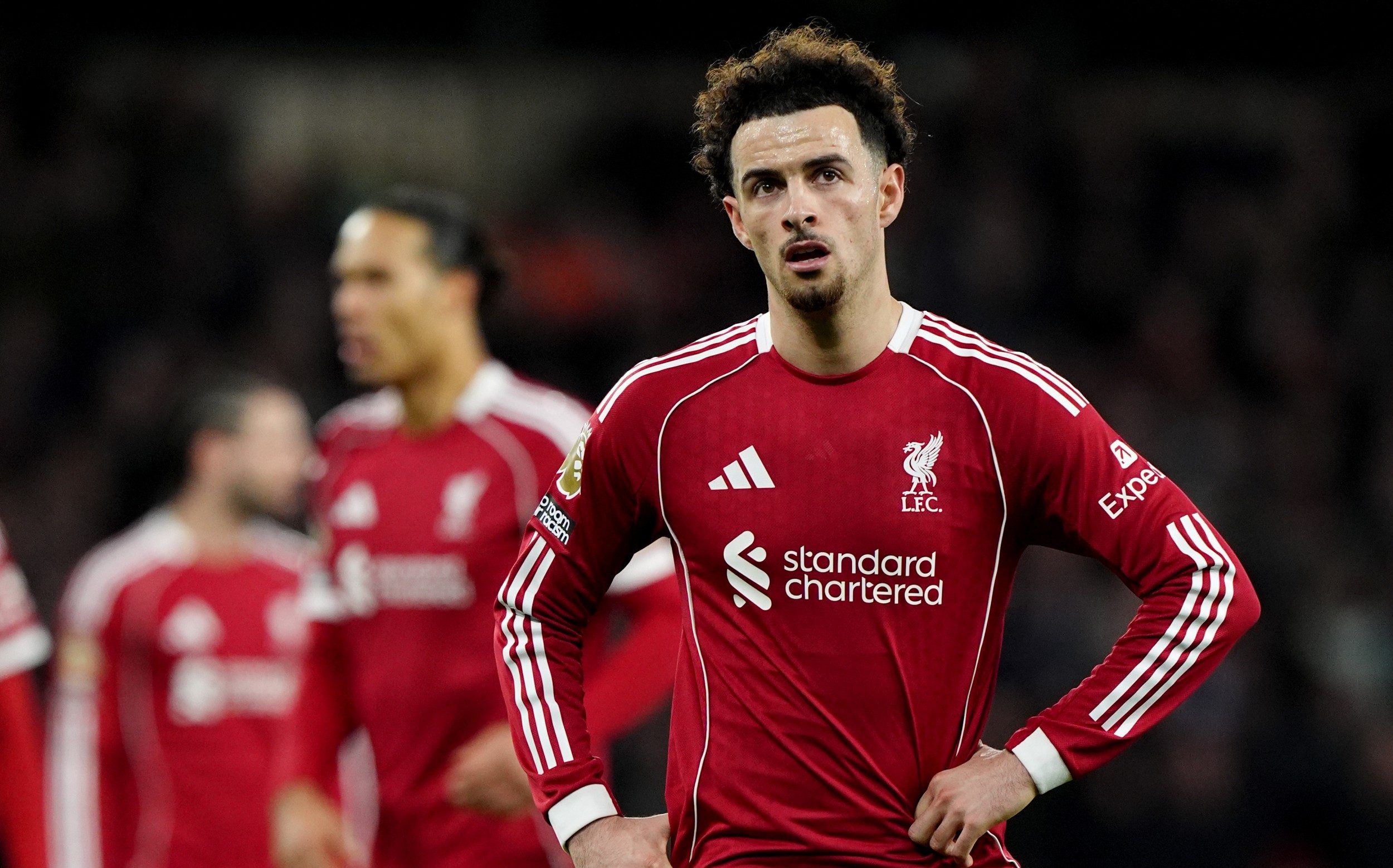
Curtis Jones has left Liverpool after 16 years with the first team and age-group sides - Jacob King/PA
The transfer of a wantaway player should not cause too many waves. But the situation with Curtis Jones, Liverpool and Inter Milan is different.
Liverpool appear likely to break an extraordinary 134-year-old record this campaign, given Jones has followed fellow England internationals John Stones and Djed Spence to the Nerazzurri.
Formalities were completed on Friday after the clubs agreed a deal that could eventually reach £35m. It was the right solution for Jones, who was frustrated by not being a regular starter, and Liverpool, who risked losing another talent for nothing in 12 months.

Jones was unveiled as an Inter player on Friday - Pier Marco Tacca/Getty Images
But the right solution does not always mean the best. It is healthy for Jones to pursue a new adventure and experience a different way of life and football, hoping it will be a catalyst for him to get back into Thomas Tuchel’s plans. It is impossible to say, however, that his departure does not create a chasm.
For the first time since Liverpool came into existence in 1892, the prospect of them going through the season without fielding a player who was born in the city for a game is real. The Kop used to sing about having “a Scouser in our team”, but now the well is dry.
How extraordinary. This sequence has been maintained over 134 years and at a time when concerns persist locally about the club’s identity, after the 38 per cent investment from Amit Bhatia, Jeff Bezos et al through the symbolically named 1892 Holdings, emotions on the subject run high.
Jones was not the most storied Liverpudlian to pull on a red shirt, but he had plenty of ability, amassed 228 appearances, scored a few wildly celebrated goals – not least one in a Merseyside derby in January 2020 – and he left with two Premier Leagues, the FA Cup, two League Cups and the Club World Cup.
He always had belief and you knew his character was different when, on a pre-season tour in July 2018, Jones explained he had been frustrated with Jürgen Klopp for not picking him for a game with Everton at Goodison Park.
For context, Jones was 17, bursting with exuberance, but had not been considered for his debut.
There was impetuosity but, crucially, he possessed understanding, an appreciation of what it means to grow up in the city and the responsibility of playing for Liverpool. A lot is expected of local boys, who are often judged to higher standards, but that is down to history.
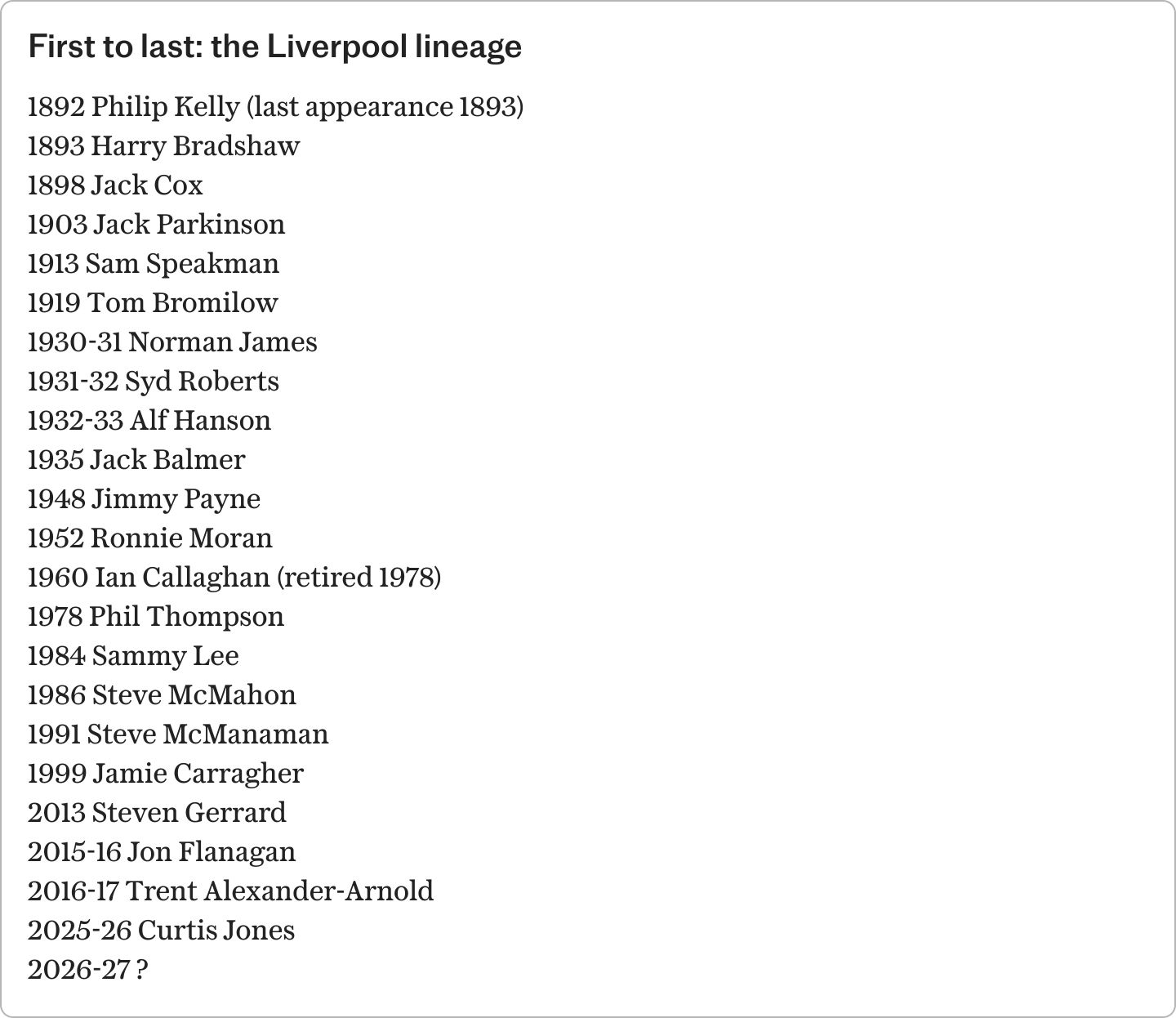
Liverpool’s Scouse heart started beating on November 26, 1892. The team had been made up primarily of Scotsmen after the club’s inception, but in a Lancashire League match at Rossendale, which they won 2-0, Philip Kelly became the first man born locally to play for Liverpool.
Kelly’s career, unfortunately, was short. He was attacked by two players in his third game, against Southport, and never kicked another ball, but the father of 13 prompted a trend that continued into the modern era.
Advertisement
Harry Bradshaw was next to appear in 1893, the baton he carried for five seasons picked up by Jack Cox (1898) then passed to Jack Parkinson (1903), whose mantle was taken on by Sam Speakman (1913) then Tom Bromilow (1919), who became a stalwart through the 1920s.
Norman James (1931) followed and then, significantly, was Syd Roberts, from Bootle, who made one appearance in 1931-32. Without him, the sequence would have been broken. It would not be the first time a boy from Bootle came to Liverpool’s rescue, as one of Telegraph Sport’s columnists would testify!
After Roberts came Alf Hanson (1933) and then the club’s first genuine local hero: Jack Balmer made his debut in 1935 but was still plundering goals when Liverpool unexpectedly won the league in 1946-47.
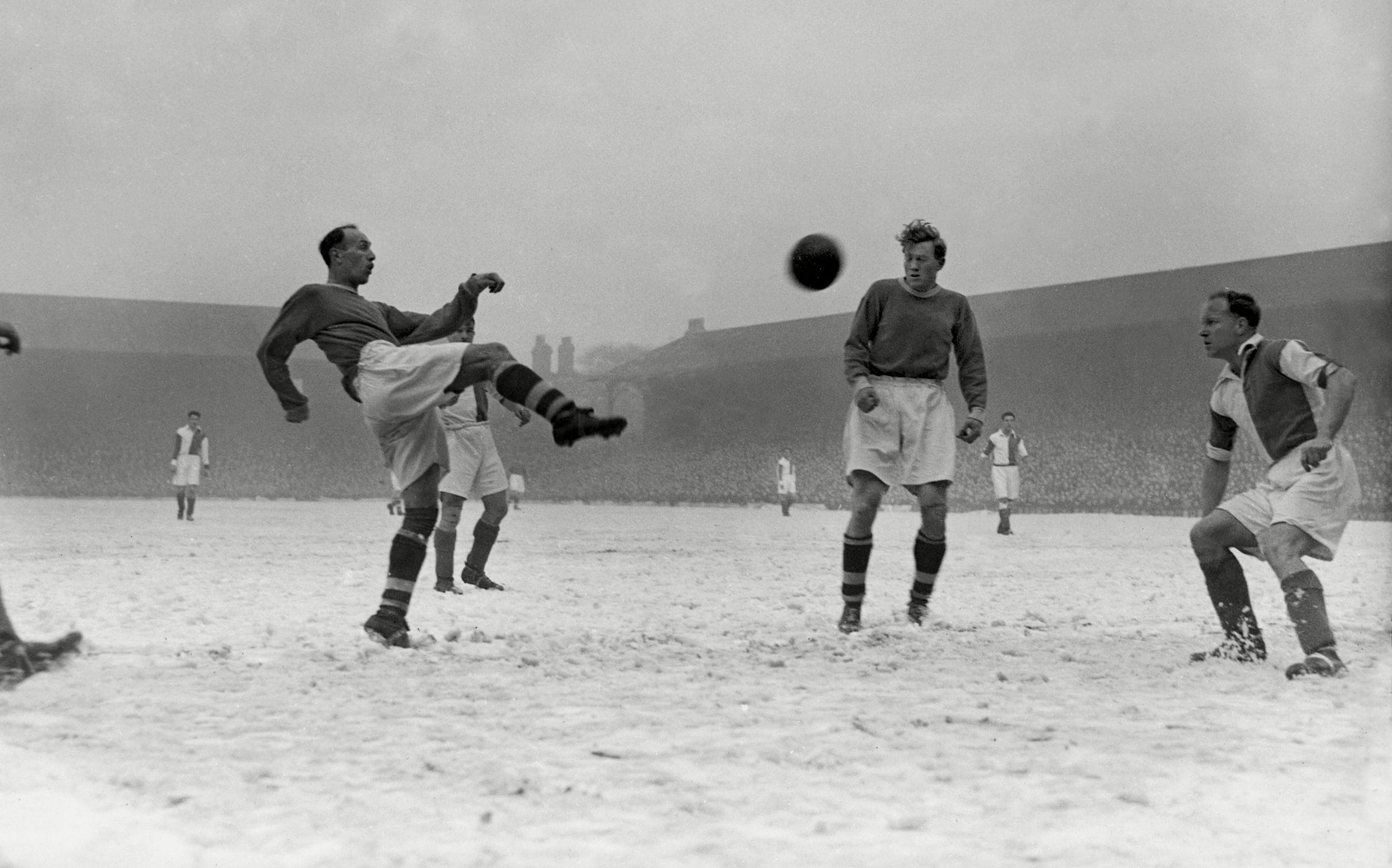
Jack Balmer gets a shot away in the snow during a match against Blackburn Rovers - Shutterstock
Balmer, for perspective, ranked 51st when the club ran a poll to rank their greatest 100 players earlier this summer – the winner, edging out Sir Kenny Dalglish, Ian Rush and Mohamed Salah, was Steven Gerrard.
Jimmy Payne (1948) played for four years and his time overlapped with Ronnie Moran (1952), a man who would go on to become one of the cornerstones from which the modern club was built. If the names you have just read mean little, Moran takes us into the land of the giants.
Ian Callaghan (1960), Tommy Smith and Chris Lawler (both 1963) were totems for Bill Shankly, paving the way for all that followed with Phil Thompson, the embodiment of the boy who grew up with eyes only for Anfield and became one of its immortals. Fan, player, captain, coach, caretaker manager, ambassador. Thompson did it all.
If you think of the club’s biggest achievements since, Liverpool fingerprints tend to be all over them. David Fairclough’s goal against St Etienne paved the way to the first European Cup in 1977, while Terry McDermott and Smith scored two of the three goals in the final.
A remarkable nine Liverpool-born players featured through the following season, in which they retained their status as Europe’s best, before Thompson lifted the trophy in 1981, that success only possible thanks to unexpected contributions in the semi-final against Bayern Munich from Howard Gayle, who was born in Toxteth, and defender Colin Irwin.
The most recent generations, which include Steve McManaman, Robbie Fowler, Jamie Carragher, Gerrard through to Trent Alexander-Arnold and Jones – the gap being bridged by Jon Flanagan, who played the final five games of his Liverpool career in 2015-16.
Perhaps the concern of there not being a Liverpudlian influence on the team in the new campaign would have been assuaged had Barcelona not beaten them to the signature of Anthony Gordon, who was brought up two miles from Anfield and was once released by Liverpool’s academy.
The future? The current squad includes striker Jayden Danns, who had a wonderful time of things under Klopp at the tail end of the 2023-24 season, playing in the Carabao Cup final victory over Chelsea, but injury has checked his progress.
If 134 unbroken years are not to end, Danns will be the one to keep it going. Further down the line, there is excitement about the development of 15-year-old midfielder Luca Eden, but his home is across the Mersey on the Wirral, so he does not fit the criteria of being from within the city.
Clearly, there is an issue for Liverpool’s scouts to address and you wonder why an area that was so fertile in producing talent is now seemingly fallow. This, plainly, does not concern Jones. The fact a 134-year-old line is on the cusp of ending should concern many.
Source: “AOL Sports”
